

Information on this page is intended for Ireland healthcare professionals only and may contain promotional material
Microscopic colitis

What is Microscopic Colitis and what are the symptoms?
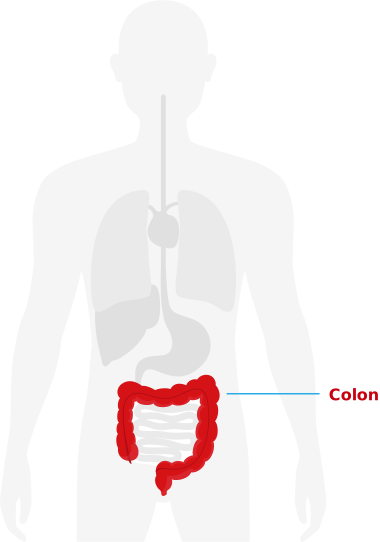
Microscopic colitis (MC) is a chronic inflammatory disease of the colon, which can cause chronic watery diarrhoea, abdominal pain, nocturnal diarrhoea, urgency, faecal incontinence, fatigue, and weight loss.1,2
Two major subtypes exist, collagenous colitis (CC) and lymphocytic colitis (LC), however an incomplete form of microscopic colitis (MCi) may also occur.1,2 The average age of patients at diagnosis is 60-65 years of age1
Risk factors for Microscopic Colitis2
Among risk factors, smoking appears to increase the risk of MC by three to five times, with onset of disease occurring at least 10 years earlier than in non-smokers.1
Use of certain medications are strongly associated with microscopic colitis, however, the effect of withdrawal of suspected drugs and their reintroduction is not known.1,2

Smoking

Older age

Use of certain medications

Female sex

Concomitant autoimmune disorders
Diagnosing Microscopic colitis2
MC may present itself similarly to other functional bowel disorders,1 including diarrhoea-predominant irritable bowel syndrome (IBS-D). Approximately 10% of all MC patients meet the criteria to be diagnosed with IBS-D. However, differences in the patient’s clinical history may indicate if someone has IBS-D or MC.2
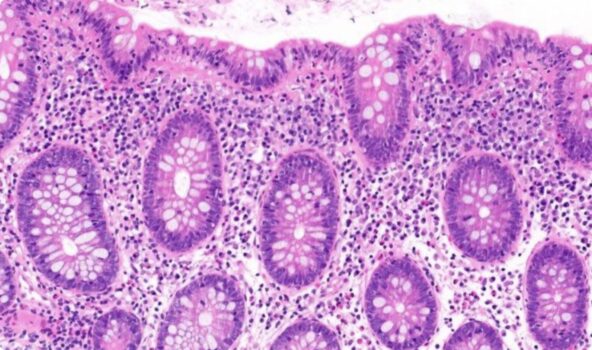
MC is typically diagnosed by histological assessment of colon biopsies;2 this involves taking very small samples of tissue from the colon, which are sent to a laboratory and checked for inflammation under a microscope.3
References
1.Miehlke S, et al. Lancet Gastroenterol Hepatol 2019;4:305-314.
2.Münch A, et al. Frontline Gastroenterology 2020;11:228-234.
3.Crohn’s and Colitis UK (2019). Microscopic Colitis [online] Available from: crohnsandcolitis.org.uk [Accessed January 2024]
NP-TP-IE-00023 | April 2026
