

Information on this page is intended for Ireland healthcare professionals only and may contain promotional material
Crohn’s disease

What is Crohn’s Disease and what are the symptoms?
Crohn’s disease (CD) is an inflammatory disease mainly affecting the gastrointestinal tract. Common symptoms of CD are diarrhoea, abdominal pain, rectal bleeding, fever, weight loss and fatigue4.
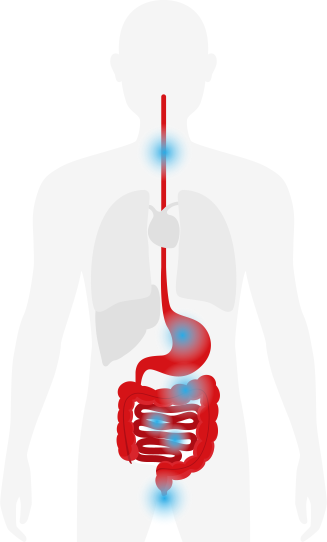
CD can affect any part of the gastrointestinal tract including the mouth, oesophagus, and large intestine, although the most commonly affected area is the final section of the small intestine, known as the ileum. Depending on the severity of disease, CD can cause narrowing of the intestine, known as stricturing, or the formation of connections between parts of the body not normally connected, known as fistulating.1,2
Risk factors for Crohn's disease3,4

Genetic susceptibility

Smoking

Use of certain medications

Living in an urban environment
Diagnosing Crohn's Disease
CD is diagnosed based on a medical history, physical examination, laboratory testing, endoscopy, and a range of imaging techniques. A detailed medical history can help to identify and/or rule out other potential causes for CD symptoms, such as coeliac disease, irritable bowel syndrome, colorectal cancer, diverticulitis, and infection.
Physical examination may help to identify patients in need of immediate medical intervention, and takes into account pulse, blood pressure, temperature, respiratory rate, body weight, and any findings from physical examination3

References
- 1.Baumgart DC and Sandborn WJ. Lancet 2012;380:1590-1605.
- 2.Pasvol TJ, et al. BMJ Open 2020;10:e036584. Doi:10.1136/bmjopen-2019-036584.
- 3.Veauthier B and Hornecker JR. Am Fam Physician 2018;98(11):661-669.
- 4. Health Service Executive. (2022) Available at: https://www2.hse.ie/conditions/crohns-disease/ [Accessed October 2025]
NP-TP-IE-00023 | April 2026
